Archive for August 2012
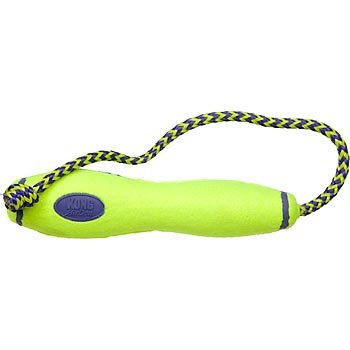
Super puppy toy
I discovered this toy years ago when I had German Shepherd pups. Using positive reinforcement training methods I needed a dog toy that could replace food rewards in training, partly because food only works up to a point to keep a dog’s attention and also because training for Schutzhund (IPO working trials) we want high drive and energy. So a toy on a rope was called for but young dogs struggle to catch a ball easily. There are various other ‘sausage’ type toys on the market, but not many of them have the rope attached for playing ‘tug of peace’ as a reward for correct heeling or recalls.
The Air Kong Fetch Stick works really well and I recommend them to my puppy school clients as they make great park toys to get a good recall. This toy fits into the interactive toy category and should not be left lying around for dogs to chew on by themselves, or play tug with each other. It’s meant for human-dog interaction and should be put away after play. It should retail at under R100.00.
So what can I advise from my own experience to help you achieve a happy walk?
- It’s about your close relationship with your dog as well as obedience. You’re a team or family, walking together, having fun. Chat to your dogs a little, let them know you’re happy to be there with them, don’t let them go more than a few meters away from you, teach them that staying near to you is where the good stuff happens.
- Teach ‘watch me’ or ‘look’ so when you speak your dog actually tunes in.
- Teaching ‘recall’ is vital – never, ever let your dog off lead if you’re not sure he’ll come back to you. Practise recall on lead, using the normal lead or a long line, with many repetitions in all possible situations. Once you have some confidence in your pup, let him trail a long (5 –10m) lead that you can quickly reach to ensure his obedience.
- Walk with a toy on a rope that you and your pup play with at home. When you call him, wiggle the toy excitedly and play ‘tug of peace’ when he comes in – you need to be more exciting than the other dogs – well, at least try!!
- In the early days, arm yourself with treats in a treat bag and clicker as well as the toy.
- Keeping moving quite quickly, humans are sooo boring when they walk slowly. Vary the route and direction, keep them guessing a little.
- When you’re near other dogs, call your pup in closer to you and try to distract him from rushing up to them. Young dogs often get into trouble in their enthusiasm which is unappreciated by older dogs. It takes can take ages for a happy youngster to learn this (or at least it took ages for Minka!) but keep working at it until you just have to use a warning tone for your dog to respond.
- Keep your dog away from dogs on lead – sometimes it’s because the other dog is aggressive and it’s not fair for your pooch to wind them up, besides being dangerous.
- Pick up after your dog – ‘Bags on Board’ is a roll of doggie doo bags to keep in your pocket or clipped to the lead.
- I seldom actually ‘recall’ my dogs, they just never move that far away that I need to. I think this comes about because I’ve done lots of heel work with them so being close to mom is in itself rewarding now. Teaching with positive reinforcement methods means your dog will be ever hopeful of goodies or a game.
- Practise in your garden: move away from your pup, call him to your side and when he arrives, click and treat. Move away again, click and treat. You can lure him in close if necessary but only reward him when he’s in close to you. This teaches him to come to heel and to watch what you’re doing because you’re unpredictable.
- Begin when your pup is just 9-10 weeks old by going to a reputable puppy school (with just 4 – 6 pups per trainer) where the emphasis is on dog-human relationship building and successful, controlled interaction between dogs. It is NOT about wild play with other pups, it’s about him learning sensible, polite doggie language so he can behave appropriately when meeting all kinds of dogs. They learn a lot in play, but also on lead in class.
So, once your pup has had all his vaccinations, get out there and begin a lifetime of pleasure and exercise! The more you do it the easier it will get.
Lately I’ve been thinking about how to help people achieve relaxed, enjoyable walks with their dogs, using my years of experience walking German Shepherds and Jack Russell Terriers.
It starts with a good place to walk, preferably off lead, although it can still be a great experience on lead. Off lead is where most guardians come unstuck, but if you can get it right, the pleasure of walking with your fast moving, free dogs is immense!
So here’s what happens with my dogs:
We go regularly to the park – a wonderful, huge space ringed by the Hottentots Holland Mountains, with sports fields and open grassed areas. A river chortles along one side, at this time of the year it is boiling and tumbling rather than chortling after all the rain. There are lots of trees along the river so it’s a pleasure even in summer. Many locals run and cycle there, and of course it’s a dog walker’s paradise. There are busy times of the day when you can pass more than 50 people and their dogs, depending on which way you go. 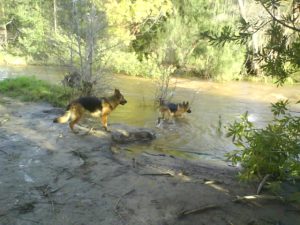
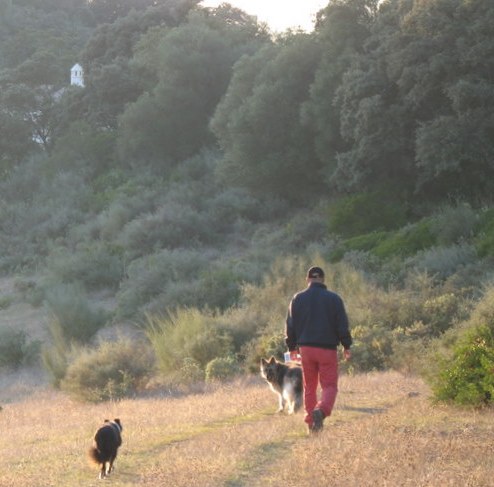
Sometimes we go to the beach at Strand. Here it can be more challenging for my big, energetic girls (GSDs) who cover so much ground quickly as the space is narrower with fewer options for changing direction and avoiding a possible problem. I am so proud of them when they meet and greet and politely choose not to respond to silly little yappers, or jumpy youngsters. They keep an eye on me and all I need to do is keep moving and maybe quietly call them away to have them break away and come after me. Shepherd bitches are not known for their patience so I am aware of their tolerance limits. Uschi usually chooses to not engage, but if she does she’s polite and disinterested. If she’s carrying a toy she’ll warn with a growl but never anything more. She’s a balanced dog with a happy temperament. Her daughter Minka is more reactive and much more interested in interacting with other dogs, but not keen on playing anymore. If a game starts I have to watch her that she doesn’t switch from ‘play’ to ‘prey’. Rather bossy, in typical insecure child fashion.
We’ve had 3 Jack Russells over the years and it’s been just as much fun with them, despite their terrier tendencies to prefer going down a mole hill to keeping up with me! Sometimes it was my 2 GSDS, Pepsi our JR and my dad’s JR Minchie too – 4 bitches all walking very happily together. Sadly we had to put Pepsi (see photo in post Reflections 27/12/11) and Minchie to sleep in May so now it’s just the big girls.
I’ll unpack my tips on achieving a happy walk in the next post.
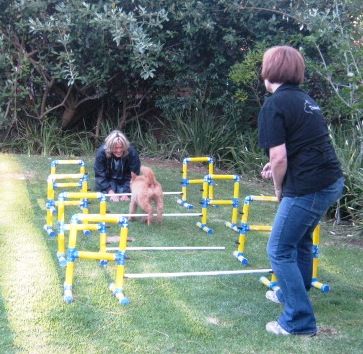
Coming Mom!
It is inevitable that some day a dog owner will worry about their cherished pet knowing without a doubt something is wrong but is not certain if it constitutes a definite emergency. How does one know when a problem is life threatening and requires immediate veterinary attention? Here is a compilation of the most common definite emergencies seen in the veterinary ER.
1. Trauma
If your dog has sustained some form of trauma such as a fall, gunshot wound, getting hit by a car or is involved in a dog fight then immediate veterinary attention is needed. Even if your dog appears fine initially a check-up with your vet is still necessary because sometimes injuries sustained from a traumatic event such as a ruptured lung, diaphragmatic hernia or internal bleeding will not manifest symptoms immediately. Wounds such as lacerations and bite wounds may be deeper than they appear and complications such as infection can result from delaying veterinary attention. Sometimes the traumatic event is not witnessed by the owner, if you find your dog limping, seemingly in pain or is just not acting right then it would be best to have her checked out.
2. Difficulty Breathing
Dyspnea is also known as difficulty breathing and can manifest as wheezing, choking, weak and raspy breathing or respiratory arrest. This can be caused by a foreign body in the throat, allergic reaction, heart disease or pulmonary disease. If there is a foreign body present it is important not to try and extract it yourself – doing so may lodge the object even deeper, completely obstructing the airway. Breathing problems almost always indicate major medical problems so do not wait to take immediate action.
3. Neurological Conditions
Neurological problems can manifest in your dog as disorientation, incoordination, severe lethargy, unresponsiveness, and coma. A normal healthy dog is bright, alert and responsive; any pronounced change in your dog’s mental status requires immediate veterinary attention. Lethargy and weakness can be seen with any serious illness and should never be ignored. Sometimes neurological disorders do not affect mentation (for instance loss of use of the hind limbs can sometimes be cause by a ruptured intervertebral disc). Again these are serious disorders that need prompt veterinary attention to achieve the most favorable outcome.
4. Seizures
Seizures are also considered a neurological condition but are so common in dogs it deserves its own category. Any dog that has never experienced a seizure before needs to be seen immediately. Signs associated with a seizure include uncontrollable shaking and tremors, loss of consciousness, paddling with the legs and possible loss of bowel or urinary control. The most common cause of seizures in dogs is epilepsy. If your dog is diagnosed as epileptic not every seizure will constitute an emergency. If your dog has multiple seizures within a 24-hour period or if a seizure lasts longer than a couple minutes then your epileptic dog may need immediate veterinary attention. Talk to your veterinarian more about how to manage epilepsy and what to watch for. Other causes of seizures include hypoglycemia in puppies, insulinoma in older dogs and toxicities in dogs of all ages. Read more on seizures here.
5. Suspected or Known Toxic Exposure
You found a chewed up rat bait while running some laundry down to the basement or you notice the bag of fertilizer in the garden shed has been ripped open. If you suspect your dog has gotten into something potentially toxic call the ASPCA animal poison control at (888) 426-4435 for immediate advice on what to do. A veterinary toxicologist may advise you to induce vomiting, seek immediate veterinary attention or simply monitor at home if the substance ingested turns out to be innocuous. Keep a bottle of hydrogen peroxide in the house at all times in case you are ever asked to induce vomiting. Please refer to our list of the top 10 common household toxins that could harm your dog for more information.
6. Vomiting and Diarrhea
Vomiting and diarrhea are common problems in dogs and while they can be signs of a serious problem the majority of cases are simple gastric upset that typically resolves within 24 hours. If your dog is otherwise acting fine then rest the stomach by withholding food for 4 to 6 hours and make sure your dog has access to plenty of water so they can stay hydrated. If she develops additional clinical signs such as lethargy, weakness or seems to be in pain then immediate veterinary attention is indicated. Also if vomiting or diarrhea persists more than 24 hours OR you notice blood in the vomitus or the diarrheas then go see your vet immediately. If your dog has a chronic medical problem such as diabetes and starts vomiting then it is not recommended to wait 24 hours and to seek veterinary attention as soon as possible.
7. Distended Abdomen or Abdominal Pain
If you notice your dog’s abdomen is distended and she seems to be in pain and/or uncomfortable then a serious medical problem necessitating immediate veterinary care is likely. Abdominal distension may be accompanied by dry heaves, retching, weakness, collapse and difficulty breathing. Abdominal distension can be caused by air trapped in the stomach which can cause the stomach to twist over on itself. This condition is known as gastric dilatation-volvulus—or commonly “bloat” – and usually occurs in large breed dogs. This is life threatening if not treated and the sooner you go to the vet the better your dog’s odds for a positive outcome will be. Other reasons for abdominal distension can be fluid distension (ascites) from heart disease and hemoabdomen from internal bleeding such as a ruptured spleen.
8. Ocular Problems
Eye problems in dogs have a nasty tendency to deteriorate faster than problems in other areas. These problems can quickly escalate into loss of the eye and blindness if not treated especially glaucoma. Signs of ocular disease include redness of the eye, discharge, excessive tearing swelling, squinting and constant pawing at the eye. Even if it is just a foreign body in the eye or a superficial scratch on the cornea prompt veterinary treatment can prevent a minor problem from becoming a serious one.
9. Urinary Problems
If you notice your dog is not producing any urine then go see your veterinarian as soon as possible. While much more common in cats than dogs, urinary blockages do occur and are life threatening. If you notice difficulty urinating or blood in the urine then see your veterinarian as soon as possible because it may indicate a urinary infection or urinary stones that can escalate to blockage if not treated.
10. Whelping Emergencies
If your dog goes into labor and you notice that more than four hours pass without any puppies, strains for more than 30 minutes without results or more than two hours elapse between puppies then she may be experiencing dystocia. Call your veterinarian immediately for advice.
11. Tick Fever/biliary/bosluiskoors
I’m adding this one as it’s not on the above list from the USA. In SA we have a huge problem with tick related diseases for humans and dogs. If your dog is at all listless and off his food for more than one meal, please have him checked out. Biliary is a tick born disease that kills off red blood cells which can be fatal. It is very common!
This list is by no means all inclusive of definite emergencies but is a compilation of the more common emergencies seen. If there is something going on with your dog and you are not sure if it is an emergency or not, be aware that help is just a phone call away. Always have the number of your regular veterinarian. As a dog owner you know your dog best – if you suspect something is wrong do not hesitate to call. This one act can sometimes mean the difference between life and death. Never feel embarrassed about calling or being a worrywart because it is better to be safe than sorry.
Ingredients:
500g liquidised chicken livers – or other liver
2 1/2 C flour – you can use wholewheat flour and some oats if you like
2 eggs
1/2 oil
1/2 water
Method:
Mix all the above together in food processor.
Pour mixture into a baking tray and bake at 160°C for 10 minutes.
Remove from oven and cut into tiny pieces.
Bake for 20 minutes.
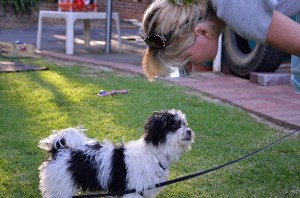
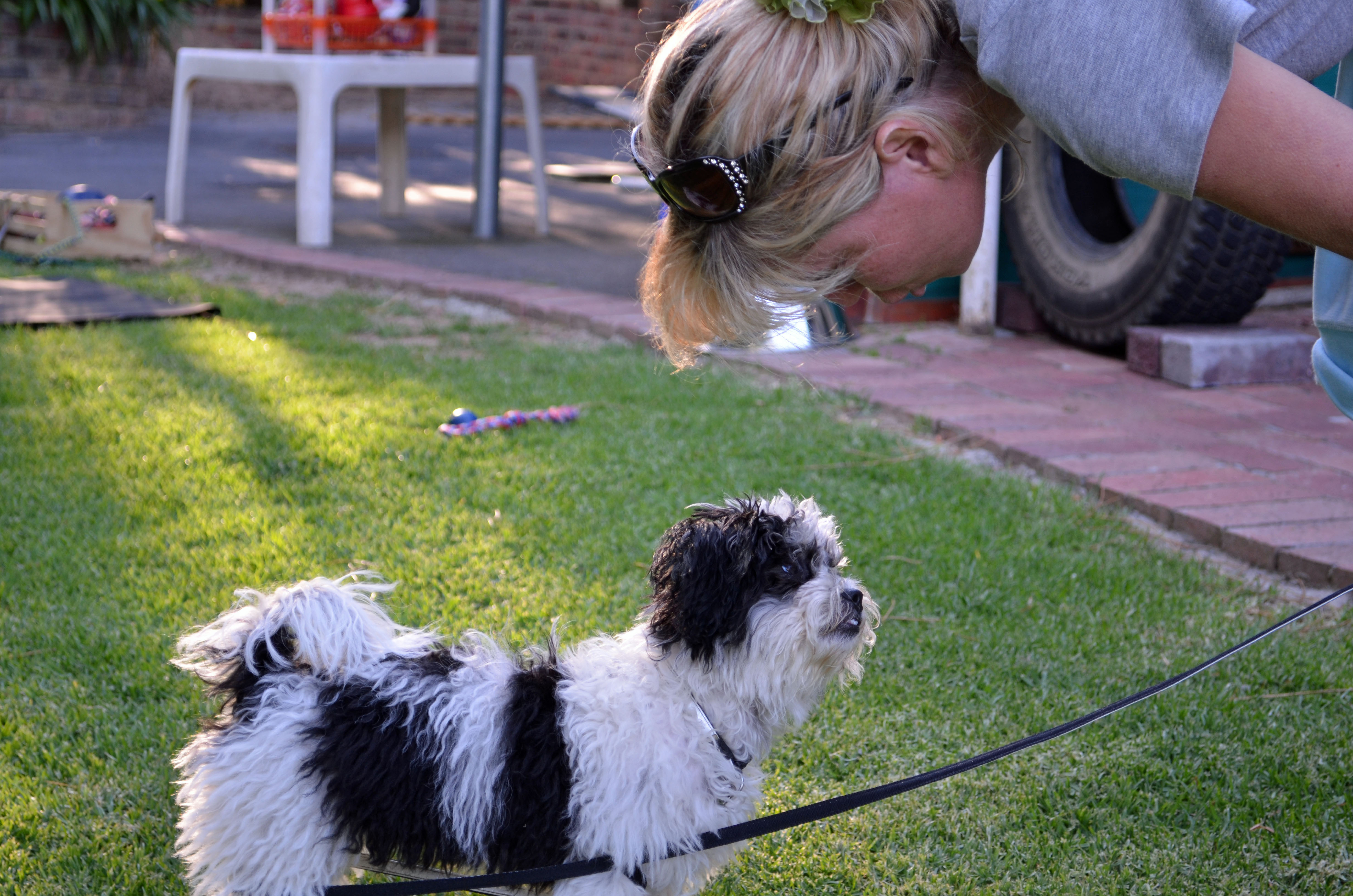
ONE Your dog can never take responsibility for getting trained. You must take the responsibility, time and effort to educate your dog. This means that you must also take the responsibility of learning to communicate with your dog. Without communication there can be no education.
TWO In the canine world there are no such things as equals. You will either lead or follow. Dogs’ reasoning ability is similar to a two-year-old child. A two-year-old child does not make an effective leader. You must be the leader. A leader is the decision maker, stays calm and takes responsibility, gives clear directives and praise – a leader does not shout, use physical force, increase stress.
THREE Every time you interact with your dog, he is learning something. If you are not teaching him the right behaviour he is learning the wrong behaviour.
FOUR “Negative attention” to a dog, is still attention. If the only way your dog can get attention is by being bad, you will train him to act bad for attention. Remember to always reward your dog for good behaviour. Pay attention when he is doing something right and let him know that you like it.
FIVE The consistency of your dog’s behaviour good or bad will mirror the consistency of your training. If you train your dog repeating the command 10 times, you can expect the dog to respond 10% of the time.
SIX A dog’s concept of right and wrong is very different from ours. Do not expect your dog to know what you may think of as right or wrong
SEVEN If you are correcting the dog, are you certain that the dog understands why it is being corrected? Have you educated and then generalised the concept?
EIGHT In nature there is no form of punishment, only consequences. If you can stop thinking punishment and focus on what the dog perceives as the consequences of his actions, you will make more headway in any situation.
NINE If you are constantly reacting to the dog’s behaviour, it is the dog that is training you! You must decide what behaviour you want and educate the dog to that behaviour.
TEN You are your dog’s primary role model. If you want quiet calm behaviour, then your must role model quiet calm behaviour.


 rosespuppyschool